

Against the background of the rapid development of global commercial vehicles, heavy-duty trucks and engineering machinery, wheel bolts, as core fasteners ensuring driving safety, directly determine the stability, load capacity and safety of vehicles. As a professional manufacturer engaged in the R&D and production of truck wheel bolts, hub nuts and chassis fasteners, our factory has long focused on cold heading and hot forging technologies and accumulated rich experience in production and application. To help domestic and international customers better understand the performance differences of products made by different processes, this article systematically analyzes the core differences between cold heading bolts and hot forging bolts from the perspectives of production principle, material structure, product precision, mechanical properties and application scenarios.
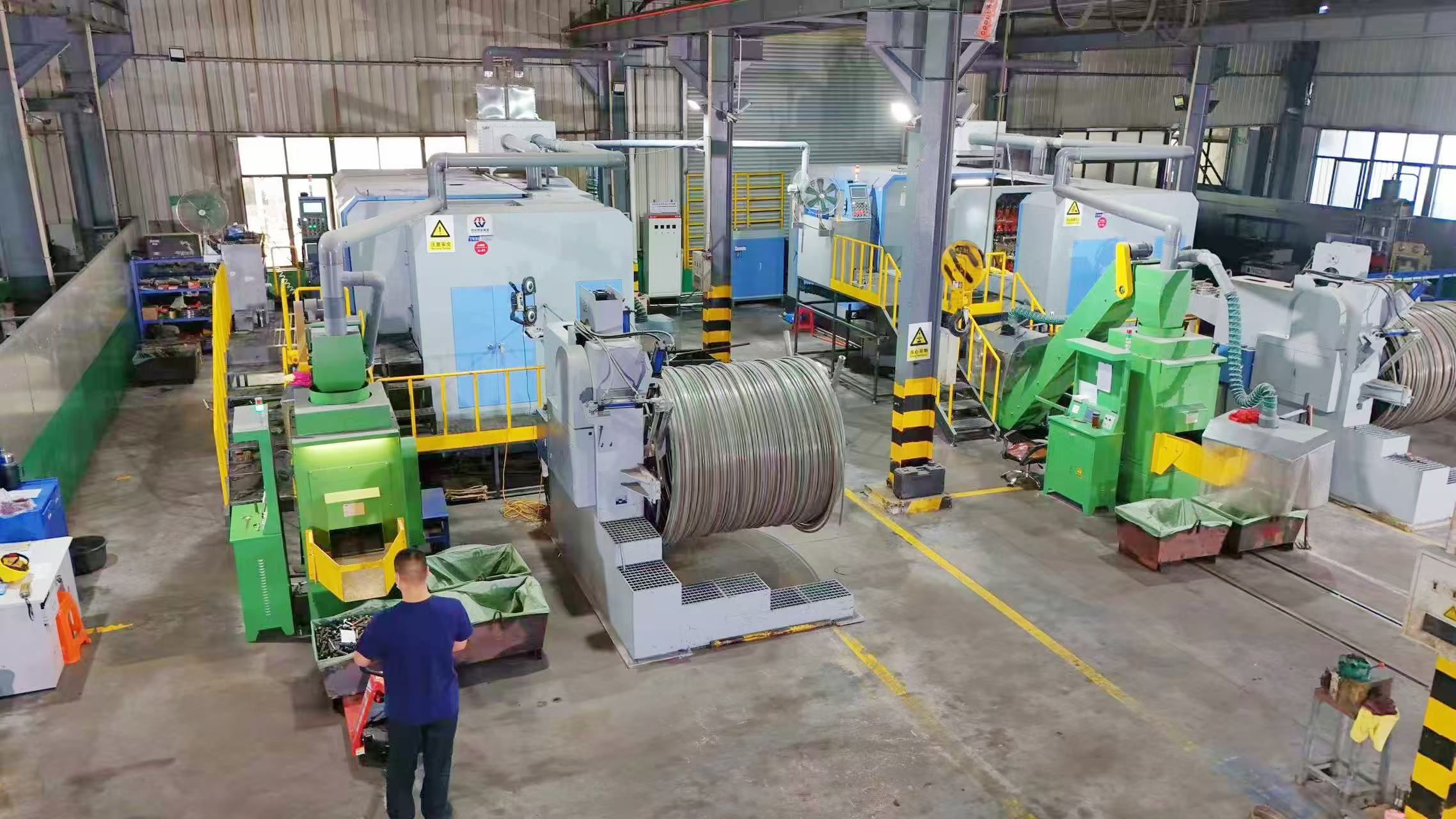
Cold heading, also known as cold extrusion, is a process that forms high-quality alloy steel wire into bolt blanks under strong pressure through multi-station high-speed cold heading machines at room temperature. No high-temperature heating is involved in the whole process, which preserves the continuous internal metal fiber flow of raw materials to the greatest extent without material oxidation or coarse grains caused by high temperatures. Due to precision forming at room temperature, cold heading bolts feature high dimensional accuracy, strict tolerance control, excellent surface finish, no oxide scale or crack risks, and strong product consistency. With the effect of cold work hardening, cold heading bolts have significantly improved tensile strength, yield strength and fatigue resistance. They are not easy to loosen, deform or break under long-term vibration and repeated loads, and have a longer service life. Meanwhile, cold heading features high material utilization rate and stable production efficiency, making it suitable for large-scale, standardized and high-precision production of truck wheel bolts and hub nuts. It is widely used in conventional transportation scenarios such as highway freight trucks, long-distance buses, semi-trailers, light and medium-duty heavy vehicles, meeting the demands of long-time, high-frequency, stable and reliable operation.
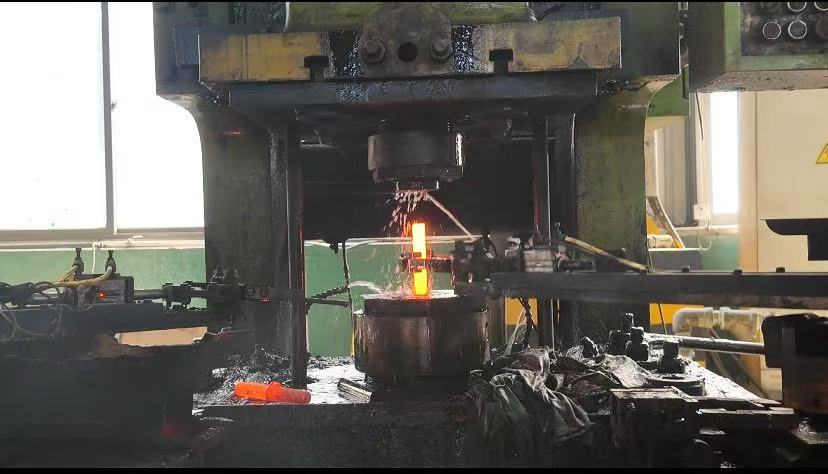
Hot forging, often called hot stamping, involves heating metal blanks to a high temperature range of 800℃ to 1200℃ to soften the material before stamping and forming with forging equipment. Metals have better plasticity and lower deformation resistance at high temperatures, so hot forging is more suitable for producing large-size, large-diameter, special-shaped and ultra-high-strength heavy-duty bolts. For mining trucks, engineering dump trucks, large engineering machinery and other extreme heavy-duty equipment, hot forging bolts can meet the requirements of ultra-high loads and harsh road conditions. However, high-temperature processing also brings certain limitations: heating causes oxide scale and decarburization on the metal surface, resulting in high surface roughness and relatively low dimensional accuracy; high temperatures also coarsen internal grains, leading to slightly weaker overall uniformity and fatigue resistance compared with cold heading products. Therefore, hot forging bolts are mostly used in off-road heavy-duty equipment, non-standard customized parts and special working conditions with relatively low requirements for dimensional accuracy.
In comprehensive comparison, cold heading bolts excel in high precision, good surface quality, compact metal structure, long fatigue life and perfect assembly fit, suitable for standardized, mass-produced and long-life demands. Hot forging bolts feature strong formability, ability to produce oversized products and higher load limit, ideal for extreme heavy loads and non-standard customization. The two processes have their own applicable scenarios rather than absolute advantages or disadvantages, and should be reasonably selected based on vehicle type, operating environment and load requirements.
As a manufacturing factory focusing on truck wheel fasteners, we always take safety, quality and reliability as the core, adhering to advanced production equipment and strict quality control systems. Our factory mainly produces high-precision cold heading wheel bolts and nuts, and also possesses the capacity for hot forging heavy-duty bolts, providing customized solutions according to the needs of domestic and international customers. From raw material inspection, multi-station forming, precision heat treatment, surface anti-corrosion treatment to finished product testing, every process implements industry standards and internal control standards to ensure that product tensile strength, hardness, toughness, wear resistance and anti-corrosion performance meet requirements, providing stable, safe and cost-effective fastener products for global commercial vehicle users.
In the future, our factory will continue to deepen the field of fastener manufacturing, continuously optimize production processes, improve product performance, strengthen technological innovation and quality upgrading, and strive to become a trusted professional supplier of truck wheel bolts for customers at home and abroad, providing a solid guarantee for the safe driving of global commercial vehicles.
Post time: Mar-27-2026